
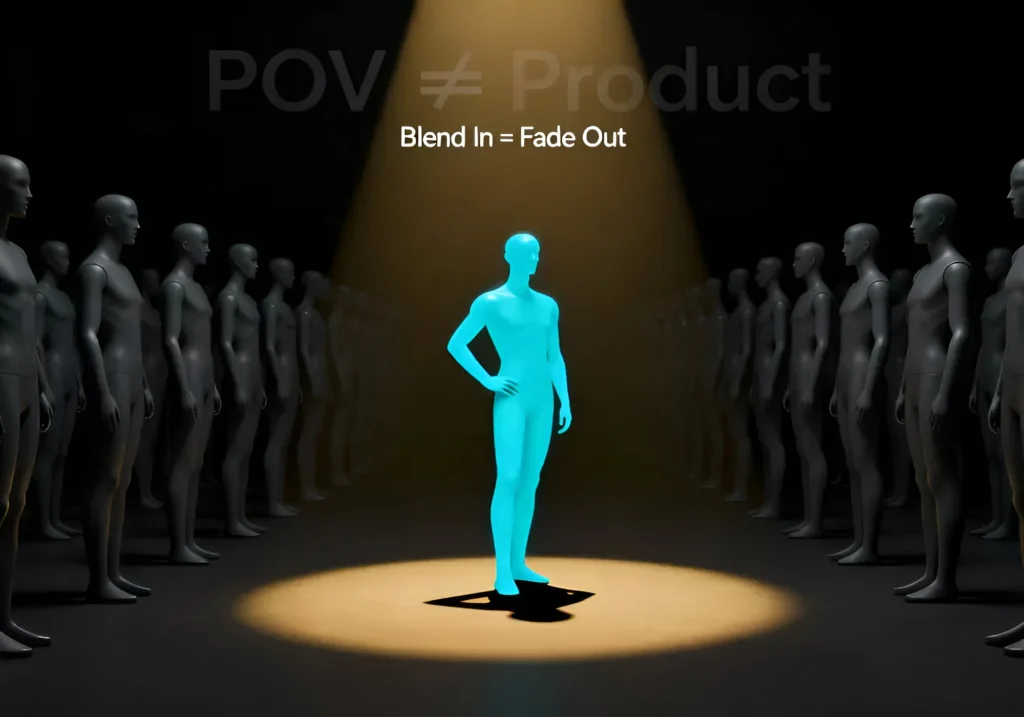
The Era of Bland Is Over
For years, marketing ran on a dangerous assumption: that visibility equals impact. As long as your logo shows up enough times—on billboards, social media posts, and influencer shoutouts, you are “winning.” But 2025 has made one thing very clear: people don’t buy brands anymore; they buy beliefs.
Generic marketing, the kind that plays it safe and aims to please everyone, is quietly dying. The algorithm-trained, attention-fatigued, culturally hyper-aware modern audience scrolls right past it. In its place rises the POV brand: opinionated, emotionally intelligent, and unafraid to make a statement.
Why POV > Product
Your product may get someone’s attention.
It is your point of view that keeps them there.
A brand POV is not a tagline or a campaign theme; it’s a belief system that seeps into your voice, your visuals, and your decisions. It tells your audience, “We stand for something, and it’s not up for negotiation.”
Take Liquid Death, for instance. It sells water, arguably the most generic product imaginable, yet markets it like a heavy metal rebellion. Or Glossier, which transformed makeup from perfection to self-expression. Neither sold products. They sold a perspective on how their category should feel.
The Algorithm Loves Personality
Instagram, TikTok, and YouTube are platforms that no longer reward just consistency but have come to reward character.
The most successful brands today don’t “post”; they perform, debate, provoke, and participate.
A POV gives your brand a repeatable narrative framework. Rather than scramble for “what to post next,” you anchor content in a perspective, something that gives every visual, caption, and campaign a clear voice.
Think of it as creative gravity:
It’s when your brand has a point of view that your strategy stops floating in randomness.
Data Supports It
In fact, per Google’s 2024 Brand Relevance Study, 78% of Gen Z consumers say they’re more likely to buy from brands that take a clear stance, not necessarily political, but rather personal, cultural, or ethical.
Meanwhile, “neutral” advertising suffered a 36% year-over-year drop in engagement because audiences interpret neutrality as detachment.
In a world where every scroll becomes a battlefield of opinions, silence is the reading of indifference.
Building Your POV Framework

A brand’s point of view doesn’t have to be loud; it just has to be consistent. Here’s how you build one that actually sticks:
1. Define Your Cultural Context
Identify the world your brand lives in, not just your category.
Are you solving a functional gap, or are you challenging a cultural behavior?
Example: Oatly didn’t just sell oat milk; it sold rebellion against industrial dairy culture.
2. Express a Sharp Tension
Every strong POV starts with tension: the conflict your brand exists to solve.
A powerful starting point might be, “What does the world get wrong that we get right?”
3. Translate Beliefs Into Behavior
Your POV should show, not just through words, but in how your brand behaves: tone, visuals, partnerships, even silence. Consistency is what makes it feel like truth.
4. Be Ready to Polarize
A point of view that pleases everyone isn’t a point of view; it’s PR. Strong brands attract and repel. That’s how they create gravity in a distracted market.
Why Brands Without a POV Fade Out
When everything looks like everything, people stop caring. The internet doesn’t need more “trusted” brands; it needs trusted perspectives.
A POV gives your marketing soul a reason to exist beyond transactions. It turns campaigns into conversations, visuals into statements, and audiences into communities. Because in 2025, your brand isn’t what you sell; it’s what you stand for.